A deep dive into the streaming revolution
The world of entertainment has shifted more in the last eight years than in the previous thirty. Television once ruled the living room, cable networks dictated what we watched and when we watched it. Today, viewers choose the content, timing, device, and even language. Over the past decade, Over The Top (OTT) streaming platforms have not only transformed viewing behavior but also become one of the fastest growing subsectors in global digital media.
This review breaks down how the OTT industry is expanding, what’s driving adoption, how platforms like Netflix, Prime Video, Apple TV, Hoichoi, Chorki, Bongo and others shaped the market, and why subscription habits are changing year by year.
From cable boxes to personal screens
OTT platforms became mainstream when data became cheap, mobile penetration increased, and audiences demanded more freedom than traditional TV could offer. The shift started gradually around 2015, but the real explosion came after 2020. During lockdown periods globally, viewing hours skyrocketed, new users subscribed at record speed, and content libraries expanded aggressively to keep up with binge watching culture.
Streaming services replaced remote control browsing with smart algorithms, personalized recommendations, and on demand content. Instead of waiting for prime time, the viewer became the prime timer.
Numbers tell the story
Even without exact global uniform measurement, industry reports and platform disclosures indicate clear growth trends:
- Global OTT market grew consistently over the last five years, averaging 10 to 14 percent year-on-year growth, with some developing markets growing over 25 percent annually.
- Subscription based video on demand (SVOD) is becoming the dominant revenue model, replacing pure advertising based streaming.
- Average screen time on OTT increased from roughly 35 to 60 minutes daily in 2018 to 90 minutes plus for many users in 2024-25, depending on region and age group.
User engagement is rising not only in metros, but also in tier two and tier three markets across South Asia, Southeast Asia, and Africa. The smartphone made OTT universal. Whoever has internet, has access to entertainment.
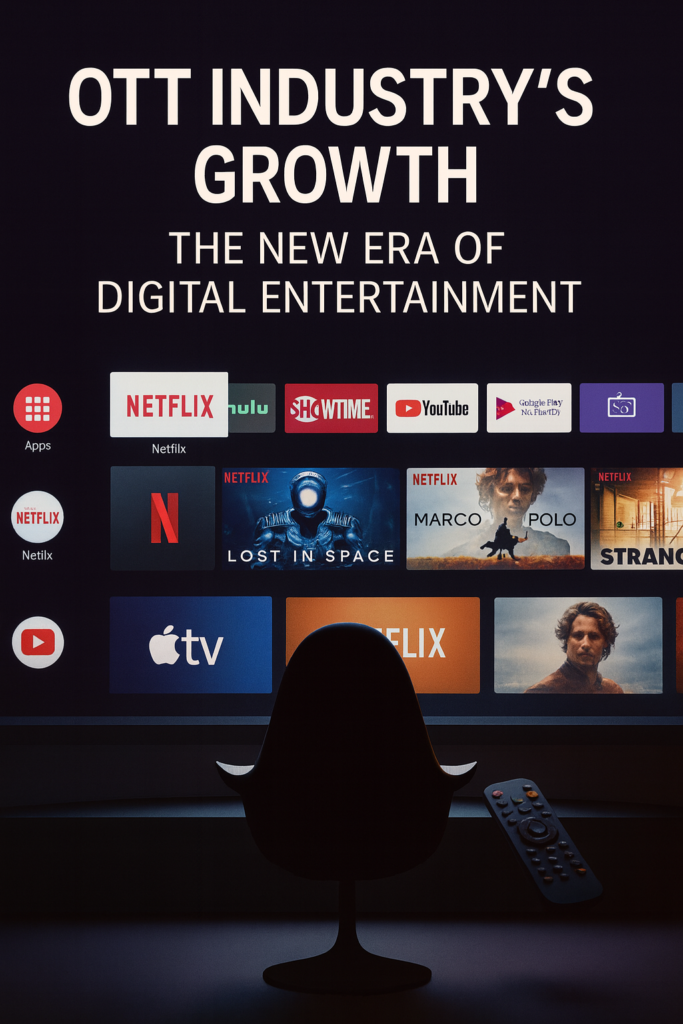
The giants shaping the global race
Netflix: The king of originals
Netflix remains the benchmark for OTT evolution. Its heavy investments in original content, local language productions, global shows like Money Heist, Stranger Things and Wednesday built a culture around binge watching. Netflix’s subscription base crossed hundreds of millions, and it remains the platform synonymous with high quality storytelling.
Their biggest contribution?
They made audiences willing to pay for digital entertainment.
Amazon Prime Video: Entertainment bundled as a service
Amazon disrupted the subscription mindset by bundling Prime Video with shopping and delivery benefits. This cross ecosystem strategy expanded its OTT user base rapidly. Prime’s content lineup mixes originals, regional movies, and global productions, appealing to families and mainstream viewers. It also invests heavily in Indian and South Asian content, capturing markets where price sensitivity matters.
Apple TV+: Quality over quantity
Apple TV+ took a different path. Instead of overwhelming libraries, it focused on premium storytelling. Shows like Ted Lasso, The Morning Show, and Foundation earned critical acclaim. Apple prioritizes visual quality, cinematography, and high budget productions that target a niche but loyal audience. They proved that smaller libraries can maintain strong retention if the content is top tier.
Regional boosters powering demand
While global giants dominate conversation, regional platforms are quietly (and strongly) expanding viewership.
Hoichoi (Bangla entertainment leader)
Focused on Bengali content, Hoichoi opened a door for regional storytelling in the OTT world. Their success with thrillers and family dramas proved language is not a barrier for streaming growth.
Chorki: Fresh voice from Bangladesh
In just a few years, Chorki captured massive attention by investing in local films, anthology series, and celebrity led originals. They tapped into urban youth and diaspora audiences, showing that Bangladesh can build competitive OTT content.
Bongo: The mass platform
Bongo built scale through accessibility and large content library like: movies, dramas, TV shows, kids category, and local entertainment. Their early entry into OTT shaped audience behavior significantly.
Regional platforms matter because they carry cultural identity, humor, accents, and storytelling styles that global platforms cannot replace. They serve audiences who want to see themselves on screen.
Subscription vs ad supported streaming
Subscription fatigue is real. With too many paid platforms, users are now selective.
- People subscribe when a hyped show drops, binge watch, then switch or pause.
- Bundled payment plans (mobile only, quarterly plans, operator partnerships) are becoming strategic tools for retention.
- Emerging markets still rely on hybrid AVOD + SVOD models where ads reduce subscription cost.
The new trend:
Users want value for money + original content worth staying for.
What viewers are demanding now
Based on audience trends, reviews, and viewing behavior:
- More regional and language based stories
- Affordable pricing tiers
- Offline viewing options for mobile users
- Less censorship, more real world storytelling
- Shorter, faster, more engaging content formats
- Not only movies — docu-series, reality shows, anime, podcasts, live sports
Sports streaming in particular is becoming the next battleground. Cricket, football and UFC broadcasts are pulling millions into OTT apps, converting free viewers into paying subscribers.
Industry challenges
Growth is rapid, but competition is intense.
- Content cost is increasing
- Subscription churn is high
- Piracy remains a threat
- Too many platforms split user spending
- Not every original series succeeds
Survival now depends on continued innovation and content that audiences emotionally connect with.
The future of OTT: What’s next?
Over the next five years, OTT is expected to evolve into a more immersive entertainment hub:
- AI powered personalization, scene based recommendations
- Interactive shows, alternate storyline choices
- Live events, concerts, and sports within OTT ecosystems
- Regional studios growing beyond Bollywood/Hollywood shadows
- Streaming integrated into VR and wearable devices
- Partnerships with telecom, fintech, and device manufacturers
The race is no longer just for subscribers: it is for attention.
Final analysis for TechInsighter readers
OTT is not just replacing TV. It is redefining entertainment as an on demand, mobile first, personalized experience. Global giants like Netflix, Amazon, and Apple shaped the trend, while regional platforms such as Hoichoi, Chorki, and Bongo brought local identity into the digital screen. The result is a thriving, competitive landscape with year on year growth, stronger user engagement, rising subscription culture, and an audience that expects more freedom than ever.
People no longer wait for content, content waits for people.
And that is the power of OTT.
In this industry, whoever understands viewers best wins.