Here’s What It Means for the Future of AI Content Creation
Meta is gearing up for its next big push in artificial intelligence by focusing on something that is already taking off fast in the AI world: video generation. According to recent reports, the company is developing new AI models designed to create images and videos, aiming to stay competitive with rivals like Google and OpenAI in this growing space.
This move shows that Meta is not just building text chatbots anymore. It wants a bigger piece of the future of AI content that’s visual, dynamic, and interactive. Let’s break down what’s going on, why this matters, and where the industry could be heading.
Meta is Doubling Down on Video Generation
Meta is reportedly working on a suite of next-generation AI models, including one focused on images and video called “Mango,” as well as upgrades to its text AI referred to internally as “Avocado.” Mango is designed specifically to generate and manipulate visual content.
Video generation technology is much harder to build than text generators because it needs to understand motion, sequencing, visuals, and, in more advanced versions, audio too. But the payoff could be huge, especially for social media platforms, marketing tools, and creative industries.
This shift reflects a broader trend in AI: users are no longer satisfied with just text. They want tools that help them create compelling, dynamic visuals easily and intuitively.
Why Video Generation Matters So Much
Here are a few reasons Meta’s focus on video generation is significant:
Visual content drives engagement
Videos capture attention faster and hold it longer than text or still images. Social platforms have known this for years. Now, AI can generate video content automatically, lowering the barrier for creators and brands.
Creators want creativity tools
People who make content are always hungry for new ways to stand out. An AI that can generate or edit video on demand could change how short films, ads, and social posts are made.
Big tech is racing for this space
Meta is not alone. Other AI leaders are already in the video generation game. Google’s Veo models can generate videos with synchronized sound, and OpenAI’s Sora 2 is also pushing into AI video creation.
This competition shows that video is the next frontier after text and images.
What Meta Could Change About the Creative Process
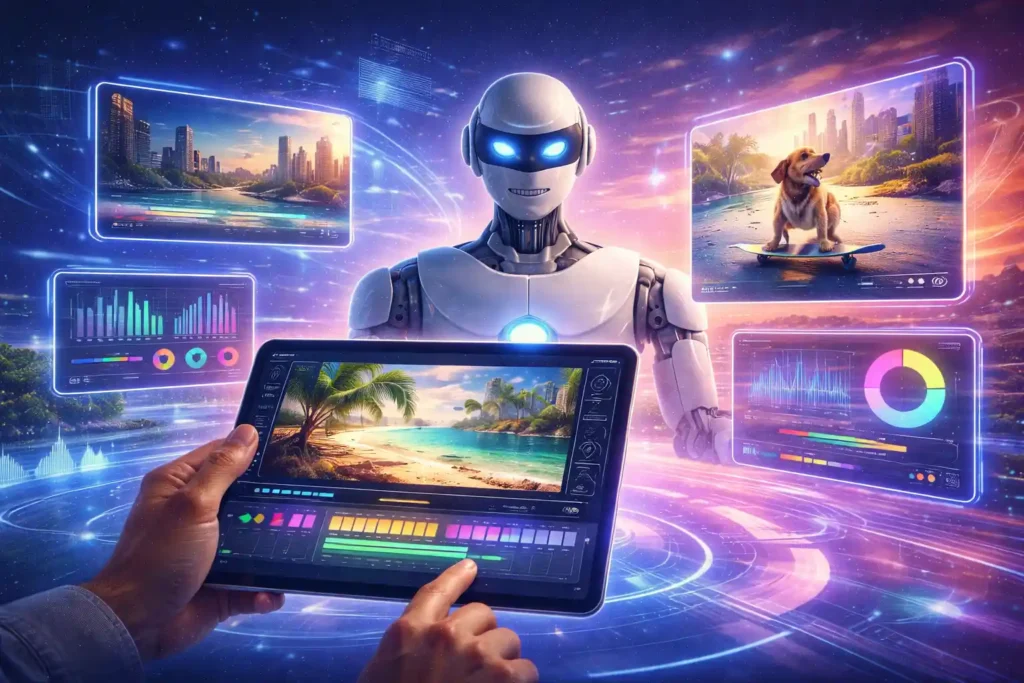
Right now, many video creation tools require skills, editing time, and software knowledge. With powerful AI on the backend, those limits could disappear. Imagine being able to:
- Describe a scene in simple text and have an AI generate the video
- Edit existing footage by rewriting parts of the scene
- Add AI-generated sound or music to match the visuals
- Customize content for social media formats instantly
That is the future companies like Meta and others believe is coming. It opens creativity to people who never before had the tools or skills to make videos.
Challenges Ahead
Despite the promise, there are real hurdles:
- Generating long, high-quality videos efficiently is still very hard
- Ethical questions around deepfakes and misleading content need to be addressed
- Consistency and realism remain technical challenges for many models
Meta and its competitors are aware of these issues, and handling them responsibly will be key if these tools are going to be widely accepted.
Where This Fits in Meta’s Bigger AI Strategy
Meta sees AI as central to its future. Beyond text generation, it already uses AI in content recommendations, ad creation, and personalization across Facebook, Instagram, and WhatsApp. Building strong image and video AI tools gives it an advantage, especially on platforms where visual content drives engagement.
Investing in video generation also helps Meta innovate new product features that could attract creators, marketers, and everyday users who want to create quickly without traditional editing tools.
What This Means for Users and Creators
If Meta’s video generation tools become widely available, expect a few key changes:
- More people will be able to produce video content with little to no technical skill
- Social media could fill up with more dynamic, AI-generated content
- Brands and small businesses may find new ways to create marketing materials faster
- The line between user-generated and AI-generated content will blur
It’s more than a convenience upgrade. It could shift how we approach creativity online.
Final Thoughts
Meta’s pivot toward advanced video generation AI shows how fast the artificial intelligence world is moving. After years of focusing on text and image generation, the next big battle is for moving visuals. For users, creators, and companies, this represents an exciting chapter.
Video generation is no longer futuristic. It is already developing, and companies like Meta want to be at the center of it. If these tools live up to the promise, the way we create and share visual stories could change more in the next few years than it has since the rise of YouTube and TikTok.
In short, AI video creation is becoming real. And the competition over who leads it is heating up right now.