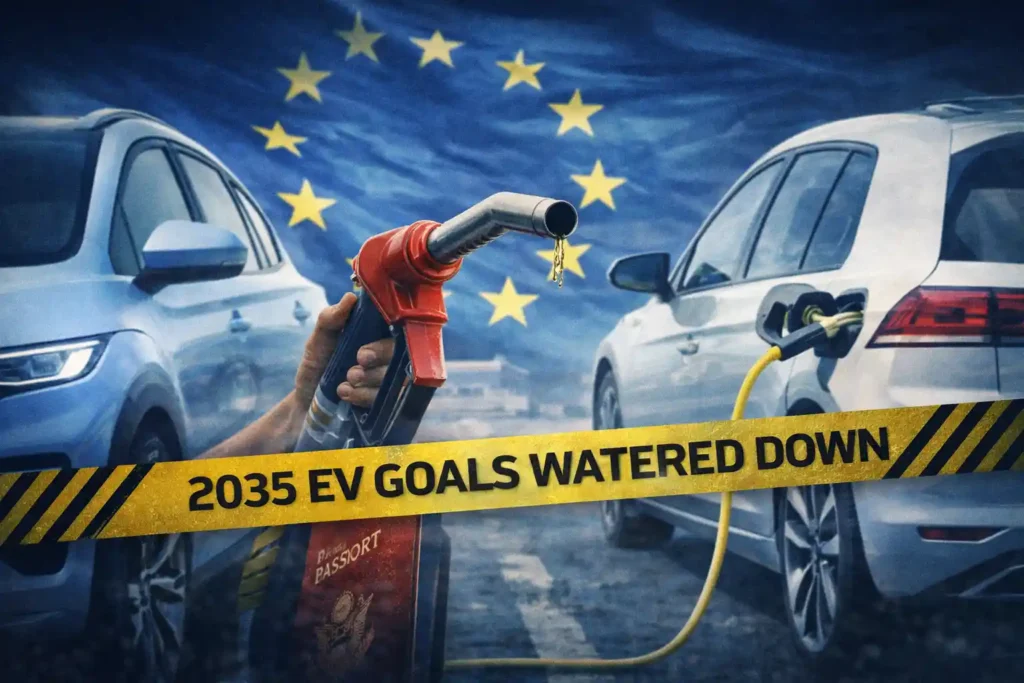
Electric Startups Voice Concern as Policy Shifts
The European Commission has introduced a notable shift in its climate strategy that has caught the attention of the global automotive industry. A key policy aimed at accelerating electric vehicle adoption in Europe by 2035 is being revised, and the response from electric vehicle startups and clean-tech investors has been mixed. (Yahoo Finance)
Here is what is happening, why it matters, and how this could shape the future of electric mobility in Europe and beyond.
What Changed in the EU’s EV Policy?
Originally, the European Union planned to require that all new cars sold by 2035 be zero-emission electric vehicles. That was a clear and strong signal in the race toward decarbonizing transportation in Europe. However, the latest proposal from the European Commission adjusts that goal. Instead of a full ban on new combustion engine cars, the updated framework would allow up to 10 percent of new vehicle sales after 2035 to still be hybrids or other models that are not fully electric, as long as manufacturers offset those emissions with carbon credits. (Yahoo Finance)
This change is part of a broader policy package aimed at balancing environmental goals with industry competitiveness and flexibility.
Why the Shift Happened
European carmakers have been vocal that the original 2035 deadline was too rigid. Legacy automakers based in Germany, Italy and other EU nations argued that they need more time to expand EV production, improve infrastructure and remain competitive with fast-moving Chinese EV makers. This lobbying effort played a significant role in shaping the Commission’s new position. (Yahoo Finance)
The revised rules are intended to ease pressure on traditional manufacturers while still pushing toward cleaner transportation. Supporters of the flexible approach argue it gives the industry breathing room to navigate supply chain challenges, cost pressures and technological transitions without risking job losses or economic disruption.
Reaction from Electric Startups and Investors
Not everyone is happy about the change. Electric vehicle startups and investors focused on clean mobility have expressed concern that softening the mandate could slow down the transition to fully electric transport. For these emerging companies, strong policy signals are crucial. They underpin long-term planning, factory investments, partnerships and talent recruitment. (Yahoo Finance)
Startups argue that if the regulatory framework becomes ambiguous or less ambitious, it increases uncertainty. They point out that clear commitments from policymakers help secure funding and enable businesses to develop next generation EV technologies with confidence.
Without a firm deadline, there is a risk that investment may shift or slow, especially for smaller companies that rely on clarity in the regulatory environment to attract venture capital and strategic partners.
What This Means for the EV Market
The EU’s revised approach does not signal a reversal away from electrification altogether. Electric vehicles are still expected to form the backbone of Europe’s automotive future. Recent data showed that EVs already represent a growing share of new car sales in the EU, reflecting consumer demand and manufacturing shifts. (Reddit)
However, allowing a small percentage of non-zero-emission vehicles to still be sold after 2035 could ease pressure on automakers, particularly those that have been slower to transition or that compete on global price points.
Analysts believe the long term trajectory toward electrification remains intact, but the pace might be more gradual than previously envisioned.
The Broader Climate and Innovation Implications
The debate around these policy changes highlights a larger tension in climate strategy. On one hand, aggressive mandates can accelerate innovation and clean technology adoption. On the other hand, overly strict targets can create resistance from established industry players who may struggle with rapid transitions.
Europe is trying to strike a balance between environmental ambition and economic competitiveness. Whether this balance ultimately accelerates or slows down EV adoption will play out over the next decade.
Final Take for TechInsighter Readers
The EU’s decision to soften its 2035 EV goals does not mean the electric vehicle revolution is over. It does mean that the path forward is more complex and less predictable than before.
Startups focused on electric vehicles and clean mobility are rightly concerned, because policy certainty drives investment and innovation. At the same time, legacy automakers welcome the flexibility, saying it gives them time to adapt and remain competitive globally.
For consumers, investors and tech enthusiasts, this policy shift is a reminder that the electric transition is both a technological and political journey. Regulatory clarity matters just as much as battery breakthroughs and charging networks.
In the end, Europe’s EV future will still be electric. The big question now is how fast, and how smooth, that journey will be.