IoT was once the buzzword everyone was excited about. Smart homes, connected cars, wearable health trackers, automated factories. It felt like a future where every device in our life would talk to each other and work without us even thinking about it. Fast forward to today, and the big question many ask is simple: Is IoT still a promising industry, or is the hype dying?
The truth is somewhere in the middle. IoT is not disappearing. It is evolving, maturing, and quietly integrating itself into the world around us. The phase of hype is gone, but the real building phase has started.
Let’s break it down.
The early hype was loud. Reality is quieter but stronger.
A few years ago, IoT was marketed like magic. Smart lights, fridges that order milk, washing machines you start from your phone. But consumer adoption did not explode as fast as predicted. Why?
- Hardware is costly compared to software
- Privacy and security concerns slowed trust
- Ecosystems were fragmented and not compatible with each other
- Many products felt like gimmicks rather than real solutions
However, while consumer IoT slowed down, industrial IoT shifted into high gear.
Factories, logistics companies, energy grids, agriculture, healthcare and even cities are using IoT quietly and effectively. There is no viral excitement here, but there is solid growth and real business value.
Where IoT is winning right now
Industrial IoT is the real powerhouse
Factories use connected sensors to reduce downtime, monitor equipment health, and prevent breakdowns before they happen. This single advantage saves millions.
Smart cities are no longer theory
Traffic lights, surveillance, waste management, parking, environmental monitoring. Many Asian cities are already using IoT based infrastructure.
Healthcare IoT is growing faster than expected
Wearable health monitors, remote patient devices, hospital asset tracking. The pandemic accelerated adoption massively.
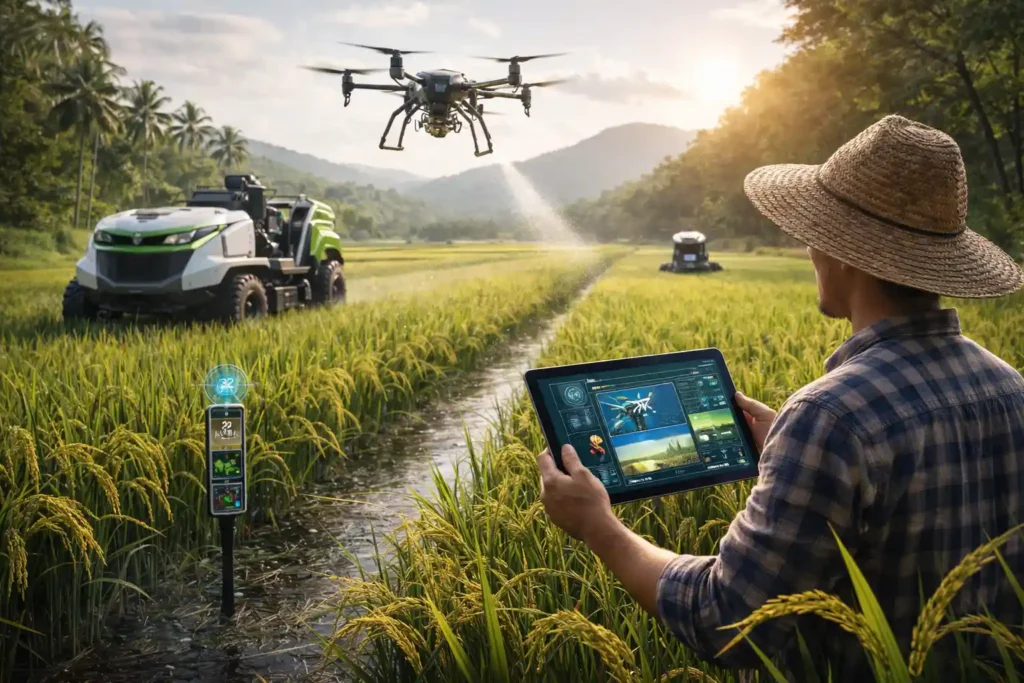
Agriculture is being upgraded quietly
Soil sensors, weather based irrigation systems, smart farming drones. Farmers do not talk about IoT, they simply call it efficiency.
Logistics and supply chain depend on IoT more than ever
GPS trucks, cold storage monitoring, warehouse automation. Every delivery company at scale is already using IoT in some form.
So yes, IoT is alive, but the front face changed. It is less about smart bulbs and more about operational intelligence.
Challenges keeping IoT from exploding faster
IoT has potential, but scaling it across the mass market is not simple.
- Hardware is expensive to deploy and maintain
- Security is a major risk when millions of devices are online
- Different devices and brands often cannot talk to each other
- Enterprises need skilled teams to manage IoT infrastructure
- ROI is long term, not instant
Unlike software, IoT needs devices, sensors, gateways, connectivity. There is friction. And friction slows mass adoption.
But friction also means opportunity for startups who solve these gaps.
So, is the IoT industry promising or wilting away?
It is promising. Just not in the flashy way we imagined years back.
The industry is not dying. It is shifting from hype phase to productivity phase. The winners will be companies that combine IoT with AI, Cloud, Edge Computing, 5G and Automation.
Because IoT alone connects things.
AI makes those things think.
Together, they create value.
We are entering a world where:
- Machines will self diagnose and request repair
- Homes will optimize energy usage autonomously
- Cars will talk to traffic signals and reduce congestion
- Retail inventory will update itself in real time
- Farms will water crops only when soil actually needs it
This is not science fiction. Early versions already exist.
The future of IoT in Asia looks especially interesting
Asia has strong advantages:
- Massive population and fast urbanization
- Government backed smart city and digital adoption programs
- Growing manufacturing and industrial automation
- Affordable labor and faster prototyping ecosystem
China, India, Japan, Singapore, South Korea and emerging markets like Indonesia and Bangladesh are actively building IoT driven solutions for real world problems.
Unlike the West, where IoT is often a convenience tool, in Asia it is a necessity tool.
Bottom line
IoT is not dead. It is growing steadily and more realistically. The hype may have cooled, but the foundation is now being built with real use cases, real ROI and real demand.
If you are an investor or founder, IoT is still worth watching.
If you are an engineer or student thinking about career, IoT skills mixed with AI or automation is a powerful combination.
If you look around and do not notice IoT, that means it is working quietly in the background.
The industry is not fading away. It is maturing.
And the next big leap will come when IoT and AI fully merge into everyday systems.
The future will not just be connected.
It will be intelligent. And that is where IoT truly shines.