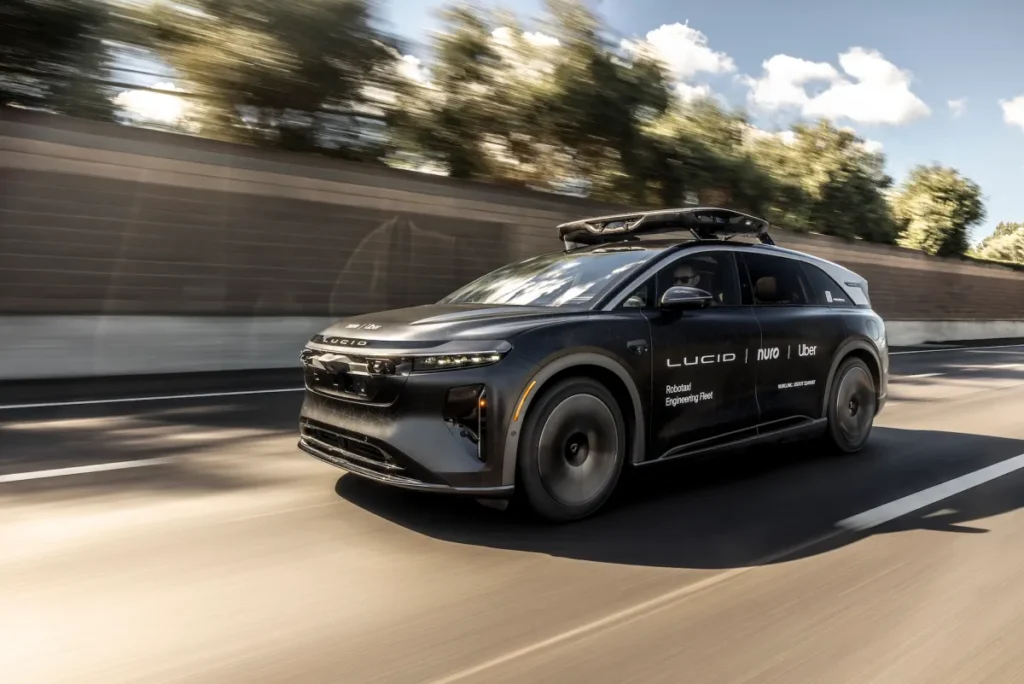
Uber’s autonomous strategy seems to be evolving in two parallel directions:
1. Self-Driving Ride Services
Uber is continuing work on autonomous vehicles designed to transport passengers without a human driver. While full rollout at scale still requires regulatory approval and real-world validation, the company is clearly committed to refining the underlying technology with an eye toward future fleets of self-driving cars.
2. Small Autonomous Delivery Robots
On the delivery side, Uber says it is developing robots specifically designed to handle last-mile delivery tasks. These smaller autonomous machines could carry food, packages, or groceries from stores to customers’ doors without a human behind the wheel or handlebars.
This dual approach positions Uber to serve both people and goods with robotics — a broader vision than ride-hailing alone.
Why Uber Is Making This Move
There are several reasons this expansion makes strategic sense:
Growing Competition in Mobility
Rival platforms, from Waymo to Tesla and even Amazon, are investing heavily in autonomous tech. For Uber, moving fast in both robotaxi and delivery categories helps secure its role in future mobility infrastructure.
Operational Cost Savings
Human drivers and couriers are expensive. Autonomous solutions promise lower long-term operational costs once technology and regulation mature, which could improve margins for Uber’s core services.
New Business Models
Autonomous delivery opens up new revenue streams. For example, small delivery robots could service dense urban or campus environments where traditional delivery is slow or costly.
Data and Platform Integration
Uber already has massive logistics and routing infrastructure. Adding autonomous endpoints — whether cars or bots — lets the company leverage existing systems for scheduling, tracking, and customer interaction.
What the Delivery Robots Could Look Like
According to the reporting, Uber’s delivery robots are intended to be small, wheeled machines capable of navigating sidewalks, crossing streets, and interacting safely with pedestrians and city environments. These are not futuristic flying drones; they are ground-based units designed for local delivery tasks.
The idea is that, over time, these robots could handle a wide range of deliveries — from restaurant orders to small parcels — helping Uber provide flexible last-mile services without relying exclusively on human couriers.
The Autonomous Ride Side Is Still Moving Ahead
On the self-driving car front, Uber continues to test and refine autonomous drive systems, either in partnership with specialized robotics companies or through internal R&D. The goal remains ambitious: to create a fleet of robotaxis that can transport people safely and efficiently.
This is a technically and regulatory challenging area. Autonomous cars must navigate unpredictable traffic, weather conditions, and complex real-world scenarios. That said, continued investment from Uber signals confidence that the technology is maturing and that commercial services are a matter of when, not if.
Challenges Still in the Way
Even with these efforts underway, there are real hurdles:
- Regulatory Approval: Self-driving cars require permissions from federal and local authorities before they can operate widely.
- Safety and Public Trust: Autonomous systems must demonstrate safety at least as good as human drivers before broad adoption.
- Urban Navigation: Delivery robots must operate reliably around pedestrians, pets, and dynamic environments.
- Cost and Scale: Developing, deploying, and maintaining fleets of robots remains expensive and technically complex.
Uber’s path forward requires navigating these challenges while proving that autonomous solutions can deliver real-world value.
What This Means for Everyday Users
If these initiatives progress as planned, you might see noticeable changes in how Uber works over the next few years:
- Robot deliveries on your street instead of human couriers
- Self-driving car options in cities that welcome autonomous ride services
- Faster, more cost-efficient logistics for food, parcels, and on-demand orders
None of this is immediate, but you can think of it as the early stages of a broader shift. Instead of opening an app and automatically seeing a human driver, you might someday be matched with an autonomous vehicle or robot depending on need and context.