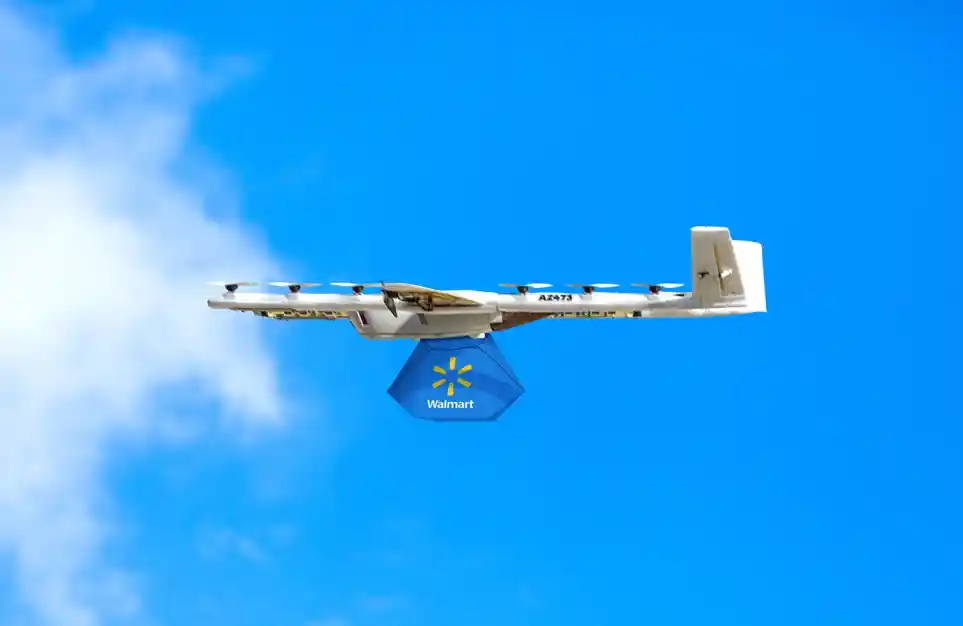
Wing’s partnership with Walmart first launched in select locations to test how practical drone delivery could be for everyday consumers. The service lets customers order items like groceries, household essentials, and small electronics through the Walmart app and have them delivered by drone in as little as 30 minutes.
Those early pilots didn’t just prove the technology technically capable. They showed real customer demand and highlighted how drones can handle deliveries in suburban and lower-density urban environments where traditional delivery can be slower, costlier, or more unpredictable.
Now, Wing and Walmart are scaling that service aggressively. Adding 150 more stores means drone delivery will soon be available in many more communities, expanding statewide coverage and giving more people the option of ultra-fast delivery.
How the Service Actually Works
Here’s the part that makes drone delivery feel almost everyday:
- A customer places an eligible order through the Walmart app
- The order is prepared at the local store’s dedicated drone delivery hub
- A Wing drone picks up the item and flies it to the customer’s location
- The package is lowered safely to the ground with precision
None of this requires the customer to interact with a pilot, stand outside, or meet the drone. It’s all automatic and tied to your purchase.
The goal is simple: give people the convenience of rapid delivery without the traffic, costs, or emissions that come with conventional delivery vans.
Why This Expansion Matters
A 150-store rollout is not trivial. It marks a point where drone delivery is transitioning from experimental to operationally scalable.
Here’s why that’s significant:
1. Wider Accessibility
More people will have the option to choose same-day drone delivery for essential items without waiting hours or days.
2. Better Logistics Efficiency
Drones can fly direct routes, avoid ground traffic, and help stores offer faster, more reliable deliveries especially for light and urgent orders.
3. Environmental Impacts
Electric drones produce fewer emissions per delivery compared to gasoline-powered vans, helping large retail logistics become greener.
4. Competitive Pressure
This move pushes rivals in same-day delivery to rethink their models. Faster delivery options can influence how people shop for groceries and necessities overall.
Where You Might See It First
While specific store lists were not fully disclosed in the announcement, Wing and Walmart have indicated that the expansion will focus on regions where the infrastructure, regulatory environment, and consumer interest are well aligned. That typically means:
- Suburban communities
- Areas with suitable drone flight corridors
- Regions with residents open to tech-driven services
State and local regulators also play a role. Drone operations must meet airspace rules established by aviation authorities, and Wing has been working closely with regulators to ensure safety and compliance.
Challenges Still on the Horizon
Scaling drone delivery is not free of hurdles. Some of the persistent challenges include:
- Navigating complex urban airspace safely
- Weather conditions that can ground flights
- Integration with local regulations and community acceptance
- Balancing speed with cost efficiency for operators
None of these are trivial, but Wing’s pace of expansion suggests that real solutions are being put into practice.
What This Means for Consumers
If you live near one of the newly added Walmart stores, you may soon see drones buzzing overhead with orders from neighbors. For consumers, this kind of service unlocks:
- Faster access to items you need urgently
- Fewer trips to the store for small purchases
- A more seamless blend of digital ordering and physical fulfillment
As drone delivery becomes less of a futuristic demonstration and more of an everyday service, shopping habits could gradually shift toward instant access for items most people used to pick up in person.